Akzo dragged into Spanish controversy about hazardous salt tips
18/07/15
The chemical company says that it contributes to the solution. Environmentalists doubt it
by Hans Verbraeken, Amsterdam
June 20th, 2015
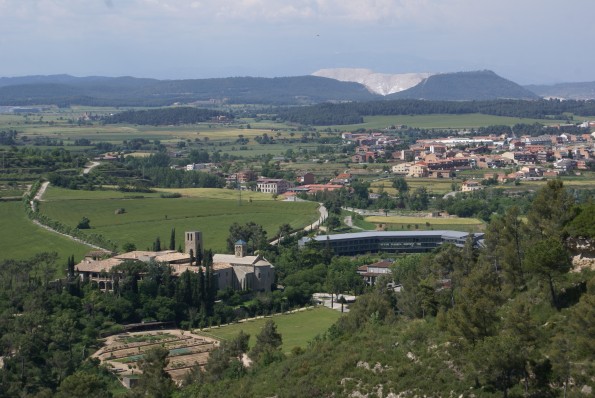
Monastery Sant Benet de Bages and the village of Navarcles, Catalonia, North-East Spain
Near the towns of Súria and Sallent, some 80 kilometres North-West of Barcelona, lie some salt tips which are several hundred metres high. They are at the centre of a dispute between the environmentalist movement and the mining company Iberpotash. AkzoNobel says that, as a purchaser of the salt, it is part of the solution.
The salt is a waste product from potash mining. The production of one ton of potash generates two to three tons of salt waste. Operating the mines is the Spanish potash mining group Iberpotash, an affiliate of Israel’s ICL (Israel Chemical Limited).
In April last, Iberpotash started to collaborate with the Dutch chemicals and pigments group AkzoNobel in order to process a part of the Catalan waste salt. At two plants, each good for 750,000 tons p.a., the companies will jointly convert some of the waste salt into high-value vacuum salt for chemical processes (electrolysis) and into special salt for i.a. foodstuff and water treatment. Two joint ventures are set up, one for production, the other one for packaging and sales. The cooperation is for thirty years.
In the meantime, the salt tips at Sallent and Súria are, according to the environmentalist movement, a huge problem. The tips salinize soil and rivers, for instance the Llobregat, the main source of drinking-water for the metropolitan area of Barcelona, with 3.2 million inhabitants. The first salt tips date from fifties already. However, since 1998, when Iberpotash bought the mines, the tips have grown drastically. Also, the environmentalist movement blames the company for operating with permits which should not have been granted. That the permits are controversial appears from many judicial decisions and procedures against Iberpotash. ICL denies the charges.
Pollution has meanwhile become so serious that the European Commission started an infringement procedure against Spain in July of last year. Brussels is targeting Iberpotash’s entire potash mining operations in Catalonia.
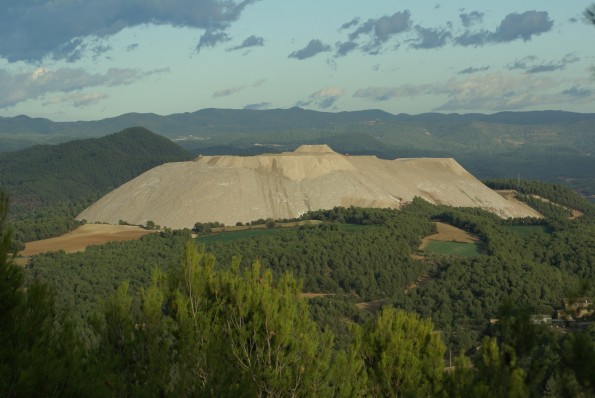
‘El Cogulló’ salt tip at Sallent, Catalonia, Norh-East Spain
In 2011 ICL decided to expand potash mining at Súria. It received the authorisation to do so, yet only on condition that additional salt waste should not land on existing salt tips. Hence, Iberpotash started building a salt plant and, a few years on, encountered AkzoNobel last year.
Now, this cooperation raises questions. Indeed, although AkzoNobel claims that it will process all waste salt generated through the expansion of potash mining, the existing salt tips will continue to grow. The tip at Súria, El Fusteret, at a rate of 900,000 tons each year; and the tip at Sallent, El Cogulló, by more than 1 million tons per year.
The Director of AkzoNobel’s salt business, Nils van der Plas: ‘ICL is forced to invest into the salt production. We contribute the competence to do so in a responsible manner. The waste receives added value. We can contribute to the goal that the tips, despite the expansion, do not grow further. This makes the problem controllable.“
According to several local environmentalist movements AkzoNobel is precisely contributing to the problem. The group benefits from the enormous pollution. Akzo gets the salt at a very attractive price, because Iberpotash has little cost to prevent environmental pollution. And this is a group which says to have very high regard of sustainability and heavily emphasises its ‘sustainability strategic targets’.
Van der Plas concedes the environmental problem to date. ‘It’s not nice. It may be clear that ICL is not up to it yet. But a solution is getting closer. If we don’t do it, will the tips then diminish?’
Van der Plas also admits that ‘the salt plant is subsidised by the potash business. Otherwise this would never be viable.’ Surely due to the high transportation cost.
As to the validity of the permits and how these were granted he wants to be practical. He says that he knows ‘the permits path, which was not really clear’ and ‘where many interests play a roll.’ AkzoNobel had Ernst & Young do a due diligence check. ‘The requisite permits for expanding salt production are all right. We take it from the facts and look forward.’
Yet Iberpotash’s permits are the subject of long proceedings in court. For instance, the Catalan High Court ruled in October 2013 that Iberpotash ultimately had no valid environmental permit for Sallent. This judgement is now before the Spanish Supreme Court, following an appeal by Catalonia and Iberpotash. The Spanish Supreme Court itself already partially annulled Iberpotash’s environmental permit for Sallent in March 2014, in a case pending since 2008. The Court missed a ‘restoration plan’ for the waste. This means that the permit for Sallent was declared void, awaiting action by Catalonia.
Catalan authorities have also described internally the pollution by Iberpotash, as reveal documents from court files. For instance, the Catalan Water Agency (ACA) and the Catalan Directorate-General for Environmental Quality, DGQA (Direcció General de Qualitat Ambiental). Regardless of these negative internal opinions, the permits were still granted.
A criminal complaint has been lodged against the Directors of ACA and DGQA, respectively; against Iberpotash; and against two of its top managers. A coroner considered the complaint to be substantiated and on June 3rd formally indicted these persons for prevarication. Their hearing is on September 29th. In December 2014 a criminal judge at the regional capital, Manresa, even sentenced three Iberpotash directors to two years in jail.
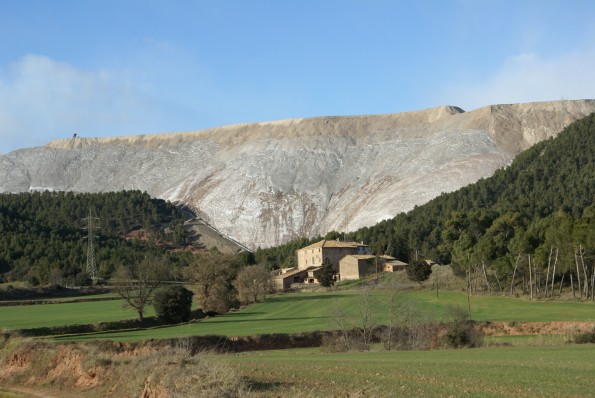
‘El Cogulló’ salt tip at Sallent, Catalonia, North-East Spain
© Het Financieele Daagblad
Translation published with the newspaper’s kind authorisation